
Kirklevington stones
Dating back to the 900s AD, the Kirklevington Stones were crafted as monuments to honour powerful lords.
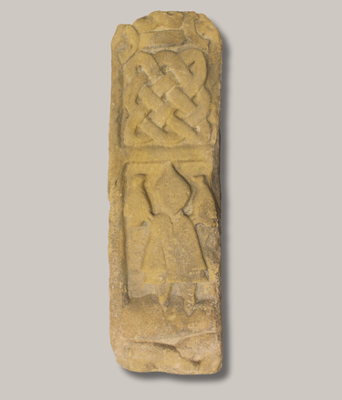
A Legacy of Lords and Legends
The Kirklevington Stones date back to the 900s AD, a time when English, Danish, and Irish-Norse communities lived side by side. The stones were created as monuments to honour powerful lords and were originally placed in the graveyard of a wooden church that no longer stands.

Kirklevington stones history
A blend of cultures
Early Scandinavian settlers in England worshipped Odin. When they first arrived, they raided churches for their wealth. Over time, they converted to Christianity but retained elements of their Norse beliefs. The Kirklevington Stones detailed designs feature Viking-inspired carvings adapted to Christian symbols.
Master carvers
Made from sandstone sourced from the North York Moors, County Durham and the Pennines, these carvings were made by a group of skilled carvers known as the Allertonshire Workshop. Using iron chisels and compasses, they carefully carved patterns into the stone.
Kirklevington stones history 2
A window into the past

Kirklevington's lords controlled large amounts of land and their influence is still evident in Old Norse place names. The wooden church, once surrounded by painted stone crosses, highlighted both religious devotion and social status.
Today, the Kirklevington Stones belong to St Martin's Church in Kirklevington but are currently on loan to Preston Park Museum, where they are displayed alongside another incredible find from the Anglo-Scandinavian period. These northern artifacts offer a glimpse into the lives, beliefs and artistic traditions of the people who lived before us.


